The conversation around wealth building has evolved, but one question remains at the core of any financial journey: Should you focus on active income or passive income?
The truth? Both matter — but in different ways, at different stages, and for different purposes.
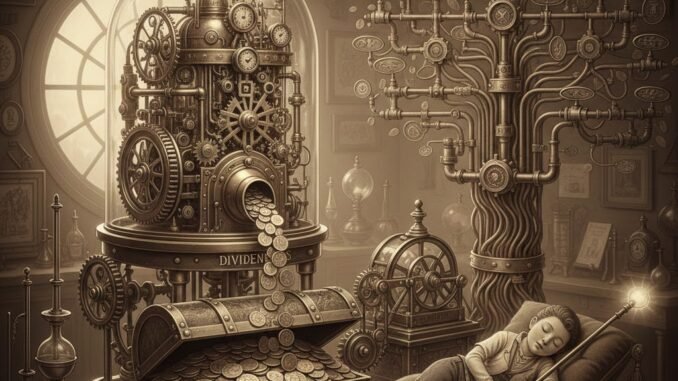
In the Wealth Machines ecosystem, we frame income not just as money coming in, but as systems that work for you. Understanding how active and passive income fit into your broader financial machine is the first step to building long-term, sustainable wealth.
What Is Active Income?
Active income is money you earn by directly exchanging time, skills, and effort — your energy. This includes:
- Salary or commissions
- Freelancing or consulting
- Side hustles
- Business income that relies heavily on your personal involvement
Pros
- Predictable and stable (especially salaried roles)
- Fastest path to increase earnings by upgrading skills
- Immediate cash flow
Cons
- Limited by time and energy
- Income stops when you stop
- Can lead to burnout if not managed well
Active income is essential, especially in the early stages of wealth building. It funds investments, buffers cash flow, and provides the capital you need to build your wealth machines.
What Is Passive Income?
Passive income is money earned with minimal ongoing effort once the initial setup is done. Examples include:
- Dividends from stocks
- Rental income
- Royalties from digital assets, books, or content
- Affiliate income
- Subscription or membership businesses
- Automated online businesses
Pros
- Scales easily
- Not limited by time
- Compounds over years
- Moves you closer to financial freedom
Cons
- Slow to build
- Requires upfront capital, time, or risk
- Often misunderstood — many “passive” incomes still require management
Passive income is how you break free from the time-for-money trap. But it cannot be built without first having a strong foundation of active income.
Active vs Passive Income: Which Should You Prioritise?
The reality is not “either-or.”
The real question is: What stage of wealth building are you in?
1. Foundation Stage (0–3 years)
Priority: Active income
- Build skills
- Increase earning power
- Accumulate capital
- Set aside high savings or investment rates
2. Growth Stage (3–10 years)
Priority: Active → Passive
- Use active income to fund assets
- Build your first passive income streams
- Start business systems, digital assets, and investments
3. Freedom Stage (10+ years)
Priority: Passive income
- Let your investments work harder than you do
- Optimise, automate, or outsource your active work
- Focus on assets that compound without your time
- Move towards a lifestyle of autonomy and choice
Why the Wealth Machines Framework Combines Both
At Wealth Machines, we focus on three core ideas:
1. Income Streams Are Machines
They need to be built, tuned, and automated — not left to chance.
2. Active Income Funds Your Passive Engines
Your job or business is the fuel that builds the machines that pay you later.
3. Passive Income Is the Endgame
It buys freedom, time, and optionality — the highest form of wealth.
Final Thoughts
The debate between active and passive income is outdated. Wealth is built when both sides of the engine work together:
- Active income builds capital.
- Passive income maintains and grows wealth.
- Together, they free you from trading time for money.
In 2025 and beyond, the smartest individuals are not choosing sides. They are building wealth machines — systems that combine skills, capital, content, and technology to create income that compounds over time.